



The Importance of Using a Tuner: Finding Your Perfect Pitch
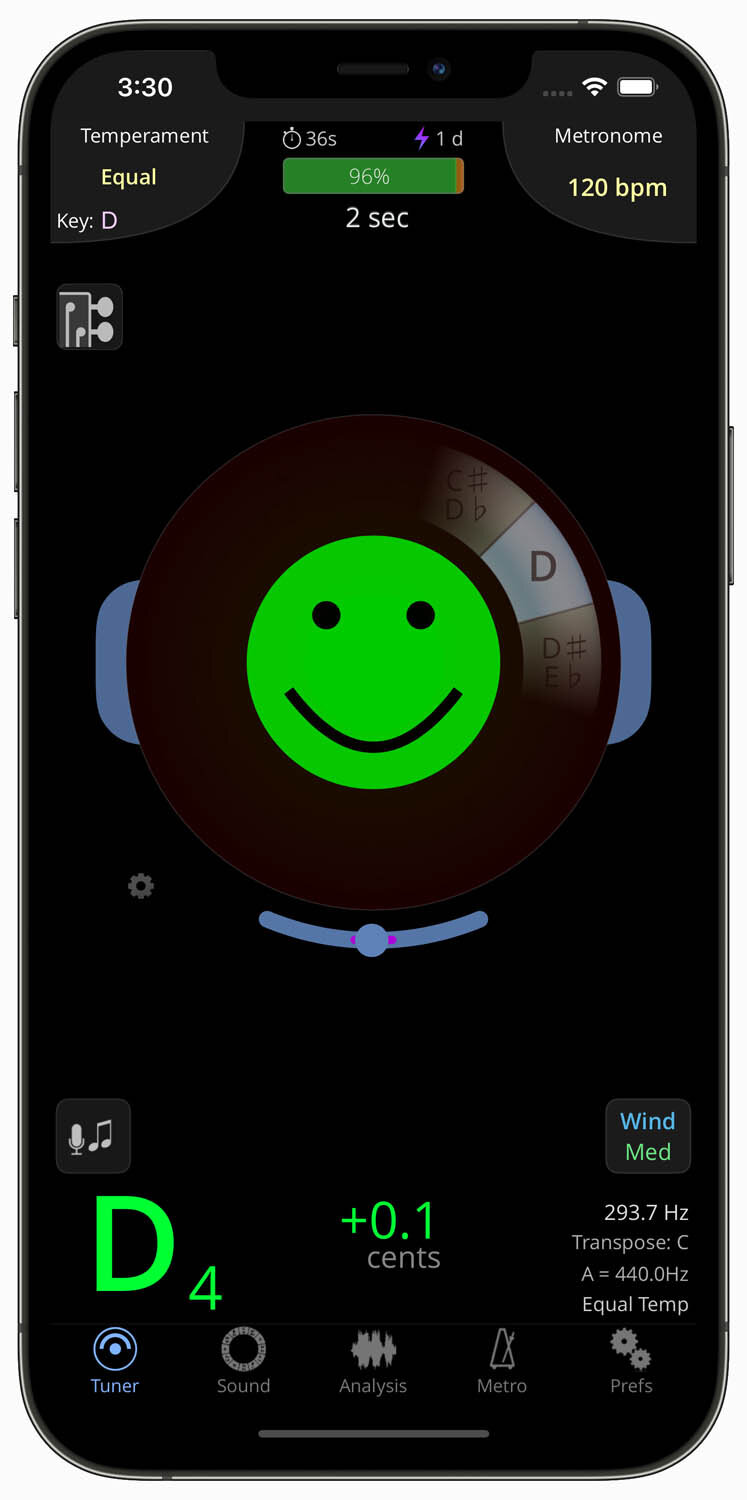
Music is a beautiful language, but like any language, it relies on clear communication. Just like people speaking the same language can do so with different accents to their voice so too can musicians play the same note but with slight changes in the way it sounds. The pitch may be a bit high or a bit low, and over the centuries musicians have come up with ways to analyze these differences so that multiple musicians can better "play in tune." Just as proper grammar and pronunciation are essential for understanding spoken words, playing in tune is paramount for creating harmonious music. This is where the tuner comes in. For the beginner (or even the more advanced musician) it can be a vital tool for developing accuracy of pitch.
 Scroll down to view the comparison chart of over a dozen different portable digital audio recorders.


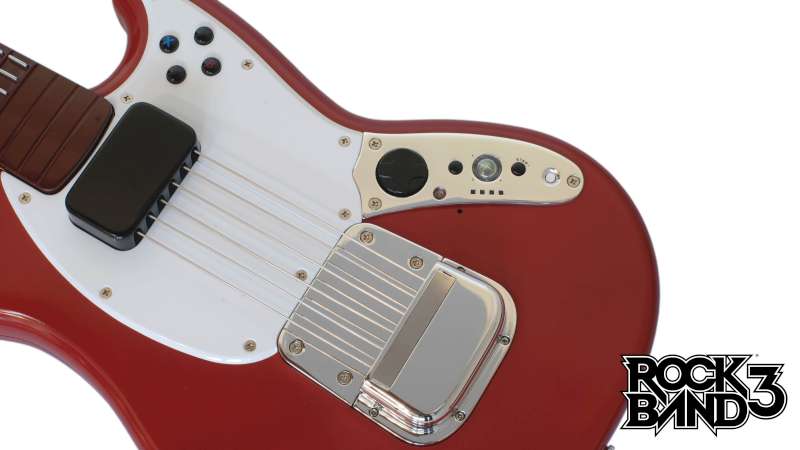 Several years ago I tried to purse some research on whether or not using music video games such as Rock Band and Guitar Hero could actually be used as educational tools in music classrooms. While there were a few concepts that could possibly benefit from the use of these and other rhythmic oriented games my final conclusion was that at that point in time they probably couldn’t be incorporated as a legitimate part of any educational curriculum. Fast forward to 2010 and the release of Rock Band 3 and things have changed quite a bit.
 Making The Case and Finding The Funding
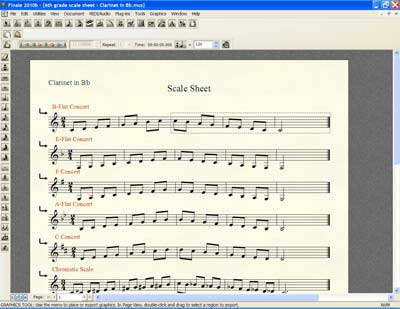 More
recent versions of Finale and Sibelius have really lent themselves to
allowing users to create attractive worksheets and handouts using high
quality music notation. There are still times however, that a teacher
or other user wants to move pieces of a composition into other
publishing programs such as Microsoft Word or Open Office. An example
of this would be wanting to paste the graphic of a four bar phrase into a
Word document or save that four bar phrase to be included in an online
web page. The good news is that you can easily save either segments of a
score or entire pages of a score as JPG, EPS, or other graphic formats
using tools that are already built into the music notation programs.
More
recent versions of Finale and Sibelius have really lent themselves to
allowing users to create attractive worksheets and handouts using high
quality music notation. There are still times however, that a teacher
or other user wants to move pieces of a composition into other
publishing programs such as Microsoft Word or Open Office. An example
of this would be wanting to paste the graphic of a four bar phrase into a
Word document or save that four bar phrase to be included in an online
web page. The good news is that you can easily save either segments of a
score or entire pages of a score as JPG, EPS, or other graphic formats
using tools that are already built into the music notation programs. When Noteflight first appeared on the scene over a year ago (read the original
  Last week I wrote a blog post about how I was now convinced that the SmartBoard was probably the best interactive whiteboard option for most music education classrooms. That opinion has not changed, but I recently came across a very good blog that devotes itself to the Wiimote Whiteboard system. For those of you that are not familiar with the idea you can make a fully functional yet
  For a year now I have been singing the praises of using
  A week or so ago I found myself working in Finale 2010, writing out a new set of warmups for my beginning band students. In the middle of it all I realized that I was asking some of the instruments to play some notes that I knew not everyone would be comfortable with in terms of fingerings. I knew that in Sibelius there was aplug-in that let me automatically add brass fingerings just by highlighting and clicking the tool, but so far as I knew it was only limited to the three valve brass instruments. I went looking for a way to easily add instrument fingerings to Finale and came across a site calledMusicTeacherTools .com. Rafael Hernandez, the chair of the Department of Music at California State University East Bay has posted there several wonderful sets ofTrueType
  Having the opportunity to review a new piece of software is always fun, and even more so when it is one that until recently I had never even heard of. We have all heard the names of other music notation programs, but as educators I would bet that few have heard of a product called Notion, at least until now. The newest version of the Notion music notation software has just been released and while it may not sit on the high pedestal with names like Sibelius and Finale, they definitely need to move over and make some room for the new kid on the block.
.jpg) I recently received a question asking how to move music back and forth from Sibelius to Finale. I too have this problem quite often as almost all of my old lessons and beginner music that I wrote out for my classes was done in Sibelius but now I would also like to be able to use it with SmartMusic (which requires Finale to create custom arrangements). Since neither company wants to allow the other to begin reading and writing their own proprietary formats, the grand dream of one day having an open, comprehensive transportable music file format is probably never going to happen. For now there is a format called
I recently received a question asking how to move music back and forth from Sibelius to Finale. I too have this problem quite often as almost all of my old lessons and beginner music that I wrote out for my classes was done in Sibelius but now I would also like to be able to use it with SmartMusic (which requires Finale to create custom arrangements). Since neither company wants to allow the other to begin reading and writing their own proprietary formats, the grand dream of one day having an open, comprehensive transportable music file format is probably never going to happen. For now there is a format called