The Hang Drum
Amazing Musical Instruments That You May Never Have Heard Of- The Hang Drum
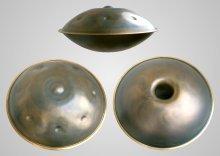 Not too long ago I first was exposed to a
very cool and earthy sounding musical instrument known as the Hang
Drum. Pronounced "hung" the drum also is known in various places around
the world as the Hank Drum. Played with the fingertips, the drum is
visually similar in playing style to what one would see with steel drums
but the sound is quite different and in a word, unique. The Hang Drum
can be played in more ways than as a simple percussion instrument, with
demonstrations to be found that show how it can be thumb rolled like a tambourine or even
drawn with a bow like a saw harp.
Not too long ago I first was exposed to a
very cool and earthy sounding musical instrument known as the Hang
Drum. Pronounced "hung" the drum also is known in various places around
the world as the Hank Drum. Played with the fingertips, the drum is
visually similar in playing style to what one would see with steel drums
but the sound is quite different and in a word, unique. The Hang Drum
can be played in more ways than as a simple percussion instrument, with
demonstrations to be found that show how it can be thumb rolled like a tambourine or even
drawn with a bow like a saw harp.
Bells vs. Drums- How To Start Beginning Percussionists
Read more: Bells vs. Drums- How To Start Beginning Percussionists
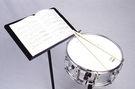 Having taught beginning band for several years now (and high school band for eight years before that) one of the biggest problems that I always face with instrumentation is how to properly start percussionists. We all know that it is absolutely imperative that percussionists be able to play both keyboard and battery instruments with equal precision, but most bands would agree that playing drums almost always is first in a student's mind when they join the band. So how do teachers build a true percussionist instead of one that just wants to be a drummer? There are many different ideas on how to start a good percussion section, and some of these ideas may surprise you.
Interview with Pianist Paul Johnston
 Paul Johnston is one of the busiest jazz pianists in the Midwest. Not only is he a faculty member at Eastern Illinois University and the Interlochen Arts Camp, but he is in high demand as both a classical and jazz pianist throughout the Heartland. After having studied with some of the best pedagogue's in the country, including jazz guru David Baker, Paul is now enjoying his role as a music educator at both the high-school and college level.
Interview with Chicago Pianist Chris White
 Being a successful musician in today’s society often requires
a high level of versatility. Many younger music educators are finding themselves
teaching privately, and often at a school or two, freelancing at night with
various performing groups all while continuing to perfect their craft. Chris White
is an up and coming pianist living in the Chicago
area who epitomizes this type of working musician. Currently working on his
third music degree, Chris maintains a busy schedule of teaching and performing
throughout the Midwest.
Being a successful musician in today’s society often requires
a high level of versatility. Many younger music educators are finding themselves
teaching privately, and often at a school or two, freelancing at night with
various performing groups all while continuing to perfect their craft. Chris White
is an up and coming pianist living in the Chicago
area who epitomizes this type of working musician. Currently working on his
third music degree, Chris maintains a busy schedule of teaching and performing
throughout the Midwest.
Buying Drums for the Jazz Program- Cymbals

In Part I and Part II, I’ve covered some general considerations everyone should take into account when attempting to choose drum sizes for their jazz program. In Part III, I’ll suggest some tips for choosing cymbals and hardware. As always, remember that there are NO golden rules. I’m simply suggesting some options based on my own experience as a drummer, percussionist, and educator. One will, no doubt, find various opinions on all of these topics, and it will ultimately be up to you to decide what will work best for your situation.
Buying Drums for the Jazz Program, Part II
 In my last article, I gave some general tips for selecting an appropriate jazz bass drum. In this article, I’ll suggest some considerations everyone should take when selecting the toms and snare drum. As stated previously, there are simply NO golden rules on this topic. However, there are some things every educator should consider when selecting jazz drums for their program.
Buying Drums for the Jazz Program, Part I
 Choosing a good set of jazz drums can be an intimidating task for even the most experienced music educator. What sizes should the drums be? What sizes should the cymbals be? Which manufacturers should I consider? Which drumheads should I use? All of these questions can cause the brain to go into meltdown, especially if you aren’t even a drummer.
Practice Problems- Becoming A Better Music Teacher, Part 5
 In this final (for now) installment of my little series on rules of thumb that we music teachers occasionally break I am going to open up a can of worms that I am sure is destined to get some response (at least I hope it will). The topic today is about home based practice and whether or not requiring written practice records is or is not a good idea. Do practice records really encourage kids to practice or do they just teach students to lie?
Read more: Practice Problems- Becoming A Better Music Teacher, Part 5
Subjective Sorrow- Becoming A Better Music Teacher, Part 4
.jpg) In past episodes of this thread on Becoming A Better Music Teacher I touched on several different rules of thumb that I occasionally catch myself breaking even though I know better. Today's topic focuses on what I call subjective sorrow, otherwise known as grading a playing performance without having a written rubric to grade it with.
In past episodes of this thread on Becoming A Better Music Teacher I touched on several different rules of thumb that I occasionally catch myself breaking even though I know better. Today's topic focuses on what I call subjective sorrow, otherwise known as grading a playing performance without having a written rubric to grade it with.
Read more: Subjective Sorrow- Becoming A Better Music Teacher, Part 4
Rotten Reeds and Mechanical Maladies- Becoming A Better Music Teacher, Part 3
In this next installment of little rules of thumb that we music teachers tend to forget from time to time I wanted to hit on something that is specific only to teaching instrumental music. It's always tough when you have a music student that seems to be trying very hard yet they can't seem to get the hang of things. You spend hours working with them to adjust their embouchure or change their hand position and yet it still doesn't seem to help. How many times have we chalked up the inability to play an instrument to lack of talent or initiative when if we had just bothered to pull out the Sani-Mist and spray the thing down we would see that it was actually NOT their fault? In this day of Swine Flu scares and other nasty maladies we don't check things on our student's instruments as much as we should, so before you tell a student they are doing it wrong, spray that sucker down and test it for yourself first! Here are some examples.
Rotten Reeds!
This is more a problem for brass and percussionists who also teach woodwind instruments. Reeds are finicky beasts, and especially for clarinetists trying to play across the break. On many occasions I have thought that a student had an embouchure or finger position problem that was preventing them from popping up to the high register. In some cases it was a poor quality or worn out reed that was simply not working right. In others it turned out to be a bridge key alignment problem, a leaking pad, or a missing cork. The moral of the story? Always try playing on the student's instrument if they are consistently having problems. If a student has the same problem week after week despite obvious practice and attention to the problem, it may very well be their instrument's fault. What may seem to be a physical problem to the teacher may actually be a mechanical/reed problem instead, especially to those teachers who did not grow up playing the instrument.
Mechanical Maladies!
Just as the woodwinds have issues with reeds brass players also have instrument maintenance problems that can masquerade as other things. Some common instrument problems can mask themselves in ways that the teacher assumes is the result of poor embouchure. Take for example a horn student of mine that always had an airy tone despite consistent embouchure exercises and buzzing practice. One day I had to play on his horn to demonstrate something (because I did not have my own horn with me that day) and discovered that it felt stuffy. A quick trip to the custodians office and a jet of water from the hose blew out a piece of plastic wrap that had been stuck in one of the tubes. Once it was out his tone was awesome and the high notes were not as big of a problem.
Sight Reading Road Blocks- Becoming A Better Music Teacher, Part 2
.jpg) In this second post on the topic of the many little rules of thumb that even experienced music teachers occasionally break I wanted to mention the painful act of sight reading. Remember that I teach beginning band these days, so this may (or may not) totally transfer over to the upper grades, but I still wanted to mention it. My topic for today has to do with how allowing a group to sight read a piece that they are not ready to play technically can have very bad consequences down the line, especially if you intend to one day play that piece in a concert.
In this second post on the topic of the many little rules of thumb that even experienced music teachers occasionally break I wanted to mention the painful act of sight reading. Remember that I teach beginning band these days, so this may (or may not) totally transfer over to the upper grades, but I still wanted to mention it. My topic for today has to do with how allowing a group to sight read a piece that they are not ready to play technically can have very bad consequences down the line, especially if you intend to one day play that piece in a concert.
Read more: Sight Reading Road Blocks- Becoming A Better Music Teacher, Part 2
Page 25 of 28